Narnia–Calormen relations
The Last BattleNarnia–Calormen relations begin in formal peace, with Calormenes permitted to visit as merchants or ambassadors, but collapse into an alliance of deception, resource extraction, and military conquest. The change is made visible first in the felled forest and the coerced labor of Talking Beasts, then confirmed by the capture of Cair Paravel; the story ultimately places this political catastrophe within the larger ending of the old world and the beginning of a different order.
Peace and the first breach
At the outset, peace between Narnia and Calormen makes the presence of an occasional Calormene in Narnia unremarkable. The shock comes not from seeing one visitor, but from discovering a group of Calormenes working alongside Narnian laborers to cut down the ancient forest of Lantern Waste. A water rat ferries newly cut logs down the river for sale to the Calormenes. When Tirian asks who authorized the felling, the rat’s answer exposes a commercial arrangement that has already turned Narnian land and timber into goods for an outside power.
The scale of the destruction becomes clear when Tirian and Jewel reach a rise overlooking Lantern Waste. A broad lane has been cut through the forest, a raw, muddy track marked by the dragging of felled trees. Whips crack; horses strain at the logs; Calormene men make up roughly half the working crowd. The wound reaches through a forest remembered for its golden and silver trees and for the Tree of Protection planted by a child from another world. What had seemed like illegal logging is revealed as an organized occupation of Narnian space, carried out in full view while the two countries are supposedly at peace.
A political alliance concealed as Aslan’s command
The conspiracy’s political meaning is made explicit when the Ape announces that the labor is not temporary. He claims that Aslan has settled everything with the King of Calormen, the Tisroc: horses, bulls, and donkeys are to be sent south to work, while digging animals, including moles, rabbits, and Dwarfs, are to be sent to the Tisroc’s mines. The animals protest that Aslan would never sell them into slavery. The Ape rejects the word slavery, insisting that they will be paid and that their wages will go into Aslan’s treasury for everyone’s benefit. The claim turns exploitation into a false promise of public service, while the Ape’s glance toward the chief Calormene signals the alliance behind his explanation.
Later, Jewel interprets the Ape’s scheme as part of a deeper, long-prepared traffic with the Tisroc. In Jewel’s account, the discovery of the lionskin was followed by a message to prepare the Calormene navy for the taking of Cair Paravel and all Narnia. The forest’s destruction and the proposed deportation of workers are therefore not isolated abuses: they belong to a plan that combines deception within Narnia with military force from abroad. The apparent religious authority of the Ape gives that plan cover, while the Tisroc’s power supplies the means to carry it out.
From covert exploitation to conquest
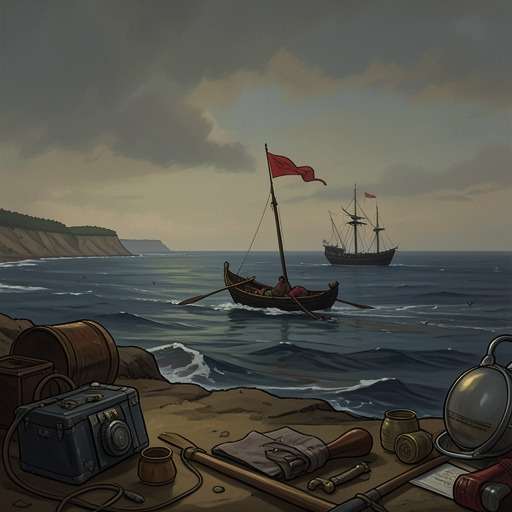
Farsight’s report confirms that the conflict has become open war. Cair Paravel has fallen after twenty Calormene ships entered by night, two nights before his arrival. The city is filled with dead Narnians and living Calormenes; the Tisroc’s banner has advanced over the royal battlements, and Narnian subjects have fled in different directions into the woods. The naval landing transforms the earlier invasion of the forest into the seizure of the kingdom’s central stronghold.
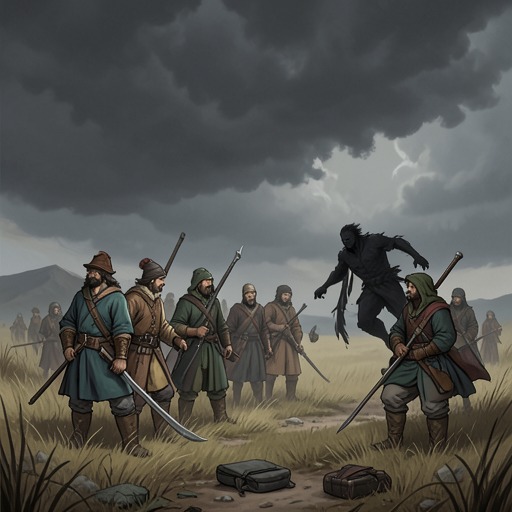
Farsight brings another loss from the country between Cair Paravel and the King’s party: Roonwit lies dead with a Calormene arrow in his side. He had spent his last hour with the Eagle and left Tirian a message that all worlds draw to an end and that a noble death is a treasure no one is too poor to buy. His death gives the invasion a personal and political cost, while his final words widen the scene beyond the struggle for territory. Against the Calormene advance, Tirian and his companions no longer expect an ordinary recovery of their kingdom; Jewel proposes that they return to Stable Hill, proclaim the truth, and face the adventure sent by Aslan.
The end of the old order
The Calormene conquest belongs to the final crisis of Narnia, but the ending does not resolve the conflict as a restoration of the kingdom’s former political life. At the Door, Aslan calls, “Now it is time!” and summons the stars home. As the stars fall, the creatures of the old world come before him. Some recoil in fear and hatred; Talking Beasts among them cease to be talking animals and disappear into his shadow. Others look at Aslan with love, even when frightened, and enter through the Door.
The judgment and separation of the creatures lead into the destruction of the world they have fought over. After the sun and moon are consumed, Aslan commands, “Now make an end.” The giant takes the Sun and squeezes it out, leaving darkness and ice at the Door. The narrative then clarifies that the railway accident was real and that the children and their parents are dead in the world they called the Shadow-Lands. Rather than ending with the defeat of Calormen or the recovery of Cair Paravel, the story frames the close of Narnia as the end of one world and the opening of the Great Story. The political rupture between Narnia and Calormen thus stands within a larger final passage: the old order ends, and the faithful enter a reality that the book presents as a beginning rather than a return to ordinary history.